
Choosing an SEO content optimization tool is where most people get stuck. Every tool claims it can improve rankings, but in real SEO work, results depend less on the “content score” and more on how well the tool helps you understand what actually needs to change in your content.
With over five years of experience working within SEO workflows, I’ve tested these tools in real publishing situations, not just in feature demos. The focus has always been the same – how well they support search intent, competitor analysis, content gaps, and on-page improvements before hitting publish.
This guide is built for bloggers, agencies, and content teams who want a clear way to choose the right SEO content optimization tool without wasting time on features that don’t improve rankings.
Comparison of the Best SEO Content Optimization Tools
A quick comparison helps you look at the top tools and see which tool fits your work before reading the full review. Prices and plans can change, so always check the official pricing page before buying.
| Tool | Best For | Free Plan/Trial | Starting Price | Main Feature |
|---|---|---|---|---|
| Surfer SEO | Bloggers and content teams | Money-back guarantee/free tools | From about $59/mo | Content editor and SEO scoring |
| Clearscope | Editorial teams | No free plan listed | $129/mo | Content grading and topic guidance |
| Frase | Freelancers and small teams | 7-day free trial | $49/mo monthly | Briefs, SEO score, GEO score |
| MarketMuse | Content strategy teams | Free limited plan | Demo-based paid plans | Topic modeling and content planning |
| Semrush SEO Writing Assistant | Semrush users | Limited free use | Semrush plan access | SEO, tone, readability, originality |
| Rankability | Agencies | Paid plans | $99/mo annually | SEO and AI search workflow |
| NeuronWriter | Budget users | Paid plans | From about $23/mo | NLP content optimization |
| Dashword | Small teams | Free report | $99/mo | Content briefs and monitoring |
| Outranking | AI SEO writing | Check current plan | Pricing varies | AI briefs and SERP writing |
| GrowthBar | Bloggers | Free trial listed | About $29/mo | AI blog outlines |
| Hemingway | Readability | Free editor/trial | Free basic editor | Clearer writing |
| Ahrefs | SEO research | Free limited access | $29/mo Starter | Keyword and competitor research |
| CoSchedule Headline Studio | Headlines | Free plan | Free/paid credits | Headline scoring |
Surfer’s recent review data lists paid plans from $59/month, Clearscope lists Essentials at $129/month, Frase lists Starter at $49/month monthly, Dashword lists Startup at $99/month, and Ahrefs lists Starter at $29/month. Pricing changes often, so confirm the current cost before buying.
How We Compared These SEO Content Optimization Tools?
I compared these tools based on how they perform in a real SEO workflow, not only by their content score. The best content optimization tools should help with research, briefs, writing, updates, and quality checks without making the content feel forced.
I reviewed each tool for search intent support, SERP analysis, detailed content briefs, keyword and NLP suggestions, content gap analysis, readability, ease of use, pricing, and best use case.
I also checked whether each tool supports a broader SEO strategy through on-page optimization, content analysis, and long-term performance tracking. Even the best tools deliver better results when they’re part of a well-defined content optimization strategy that prioritizes the right pages, aligns with search intent, and supports long-term SEO growth.
What Is an SEO Content Optimization Tool?
An SEO content optimization tool helps improve a page before or after publishing. It gives guidance on search intent, keyword coverage, topic depth, headings, readability, content score, competitor gaps, and on-page SEO.
Content optimization tools help writers and marketers ensure your content is useful, complete, and aligned with what users expect from the search result. If you’re new to this topic, start with our guide on what content optimization is before choosing a tool. It explains the fundamentals, benefits, and how content optimization improves SEO over time.
The right tool can guide you while you write your content, but it should also help you improve structure, depth, and relevance so you can create content that ranks for the right search intent. The tool should not replace your judgment. It should support it.
A strong page still needs helpful information, clear structure, real examples, trusted sources, and a better answer than what already ranks.
AI SEO Tools vs SEO Content Optimization Tools
AI SEO tools and SEO content optimization tools are close, but they are not always the same. SEO content optimization tools usually focus on improving one page. They help you make a blog post, landing page, or service page more complete and useful.
AI tools for SEO can support a wider workflow, including keyword research, technical audits, internal linking, rank tracking, AI search visibility, and content creation.
They can also speed up research and drafting, but following a structured AI content optimization workflow helps maintain accuracy, consistency, and content quality.
Even with AI-powered features, human review is still essential to verify facts, match search intent, and maintain your brand voice before publishing.
Why AI Search Optimization Matters in SEO Content Tools
Search is no longer limited to standard Google results. People now find answers through Google AI Overviews, ChatGPT, Gemini, and Perplexity. Because of this, content needs to be clear, well-structured, and useful enough to be understood by both people and answer engines.
AI search optimization tools can help content teams see where their brand appears, where competitors are being mentioned, and which topics need more depth.
The main goal is not to write for bots. The goal is to answer real questions clearly, use trusted information, and build stronger topical coverage through a comprehensive content strategy.
13 Best SEO Content Optimization Tools
The tools below are not all built for the same user. Some are better for agencies, some for beginners, and some for teams that publish content at scale. Choose based on your workflow, not only the brand name.
1. Surfer SEO
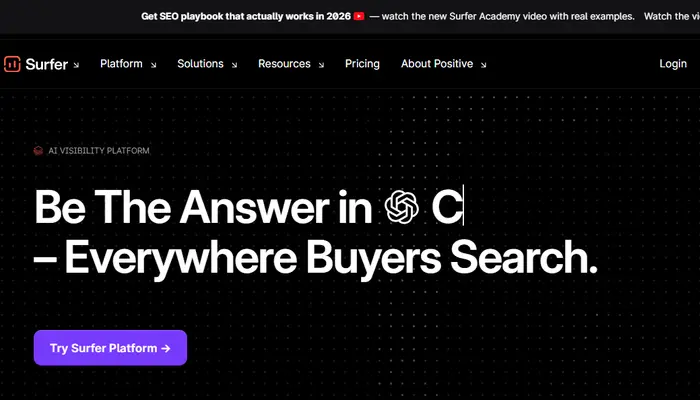
Surfer SEO is one of the most popular content optimization tools because it gives clear SEO scores, SERP-based recommendations, and a clean content editor. It works well when you need to optimize blog posts, landing pages, and existing content with practical guidance based on top-ranking content.
Best for: Bloggers, SEO writers, and content teams that want a strong content editor.
Key features: Content editor, SERP analysis, content score, keyword suggestions, audits, AI tools, and integrations.
Pros:
- Easy content editor
- Strong SERP-based recommendations
- Useful for new and old content
- Good for writers and teams
Cons:
- Can become costly with higher limits
- Suggestions still need human review
- Not a full technical SEO platform
Pricing: Recent review data lists Surfer pricing from about $59/month.
My verdict: Surfer is a strong overall choice if you want practical content scoring and a smooth writing workflow. Tools like Surfer can help structure your content, but the final quality still depends on your own expertise.
2. Clearscope
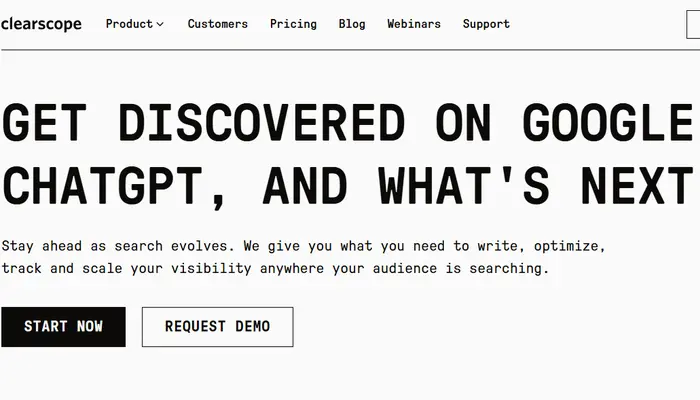
Clearscope is built for teams that care about content quality and editorial control. It gives clean recommendations, content grading, and useful topic guidance without making the workflow feel too complex.
Best for: Editorial teams, SaaS brands, and content managers.
Key features: Content grading, topic recommendations, draft tracking, AI search visibility, and page monitoring.
Pros:
- Clean and simple interface
- Strong topic recommendations
- Good for editorial workflows
- Trusted by serious content teams
Cons:
- Higher starting price
- Not ideal for very small budgets
- Limited for users who need a full SEO suite
Pricing: Clearscope lists Essentials at $129/month and Business at $399/month.
My verdict: Clearscope is a strong choice for content teams that want clean grading, clear topic guidance, and better control when creating SEO-optimized content.
3. Frase
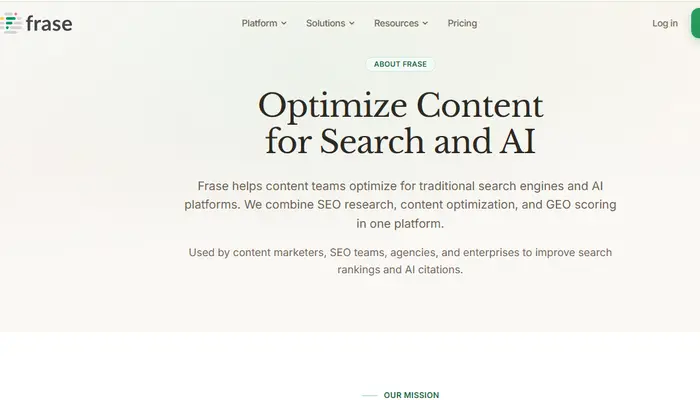
Frase is useful for writers and small teams that want research, briefs, writing support, and optimization in one place. It is easier to start with than many advanced SEO platforms and works well when you need to get a content outline quickly.
Best for: Freelancers, bloggers, and small content teams.
Key features: SERP research, content briefs, SEO score, GEO score, audits, AI visibility, and content guard features.
Pros:
- Good brief creation
- Beginner-friendly workflow
- Useful SEO and GEO scoring
- Strong value for small teams
Cons:
- Monthly limits may affect heavy users
- AI output still needs editing
- Not as advanced as enterprise tools
Pricing: Frase lists Starter at $49/month monthly, with a 7-day free trial and lower annual pricing.
My verdict: Frase is a good choice if you want a simple but serious content optimization workflow with helpful content brief builder features.
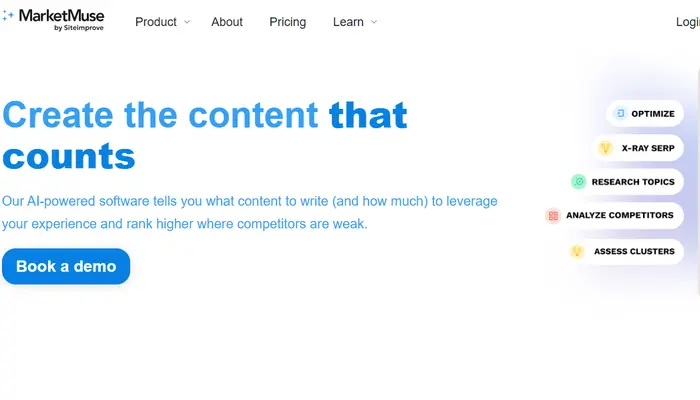
4. MarketMuse
MarketMuse is stronger for content planning than simple one-page optimization. It helps teams understand topic coverage, content gaps, and long-term authority across a site.
Best for: Content strategists, larger websites, and teams building topical authority.
Key features: Topic modeling, content briefs, competitive analysis, planning tools, and optimization.
Pros:
- Strong for topic depth
- Good for content strategy
- Useful for planning clusters
- Free limited plan available
Cons:
- Can feel advanced for beginners
- Paid plans are demo-based
- Takes time to understand fully
Pricing: MarketMuse lists a Free plan with limited queries, plus Optimize, Research, and Strategy tiers for higher content planning needs.
My verdict: MarketMuse is best for teams that want to plan content authority, not just optimize one article. MarketMuse is an AI-powered content optimization platform designed for planning, topic depth, and long-term content strategy.
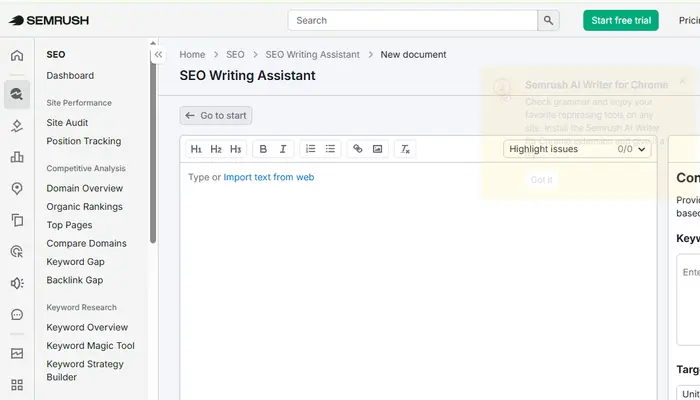
5. Semrush SEO Writing Assistant
Semrush SEO Writing Assistant is useful if you already use Semrush for keyword research, audits, and competitor analysis. It checks content for SEO, readability, tone, and originality while you write.
Best for: Agencies and marketers already using Semrush.
Key features: SEO score, readability, tone checks, originality checks, Google Docs, WordPress, and Microsoft Word support.
Pros:
- Works inside a larger SEO platform
- Good for content quality checks
- Helpful integrations
- Strong for agency workflows
Cons:
- Full access may require paid Semrush access
- Can feel expensive for content-only users
- Not as focused as dedicated content tools
Pricing: Semrush’s SEO Content Checker helps with content analysis, readability, originality, tone of voice, and recommendations based on top organic competitors.
My verdict: Use it if Semrush is already part of your SEO stack and you want one place for on-page SEO and content checks.
6. Rankability
Rankability is built with agencies in mind. It combines SEO content optimization with keyword research, audits, reports, and AI search visibility features, which makes it useful for client work.
Best for: SEO agencies and teams managing multiple clients.
Key features: Content optimization, keyword research, audits, reports, unlimited users on listed plans, and AI search tracking.
Pros:
- Agency-focused workflow
- Includes SEO and AI visibility features
- Useful for client reporting
- Full platform access included in plans
Cons:
- More than many solo bloggers need
- Credit limits need to be checked
- Pricing may be high for beginners
Pricing: Rankability lists Starter at $99/month billed annually, with full platform access and monthly credits.
My verdict: Rankability is a strong fit for agencies that want content optimization and AI search tracking together, especially when advanced SEO features matter.
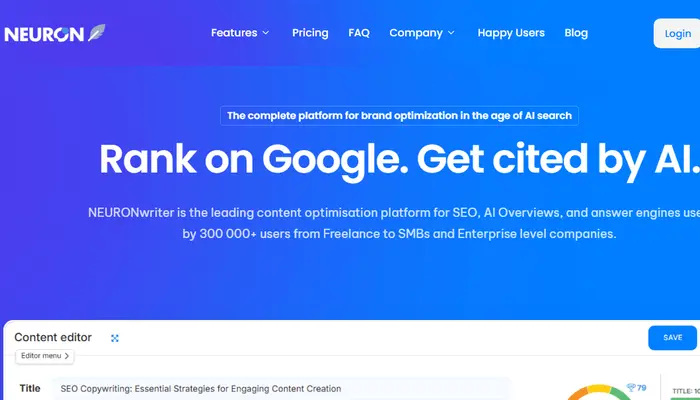
7. NeuronWriter
NeuronWriter is a popular budget-friendly tool for NLP-based content optimization. It helps users compare competitors, find related terms, and improve content without paying premium prices.
Best for: Budget users, bloggers, and small websites.
Key features: NLP recommendations, content scoring, competitor analysis, AI credits, and project folders.
Pros:
- Affordable starting price
- Good NLP suggestions
- Useful for small teams
- Multiple pricing tiers
Cons:
- Interface may need practice
- Not as polished as premium tools
- Limits depend on plan
Pricing: NEURONwriter lists yearly plan pricing from $19/month billed yearly, while recent pricing trackers show monthly Bronze pricing around $23/month.
My verdict: NeuronWriter is one of the best budget options for SEO content optimization, especially if you want to use the content editor for NLP suggestions.
8. Dashword
Dashword is a clean content optimization tool that helps teams create briefs, review keyword suggestions, and monitor content without a heavy setup. It is practical for small teams that value speed.
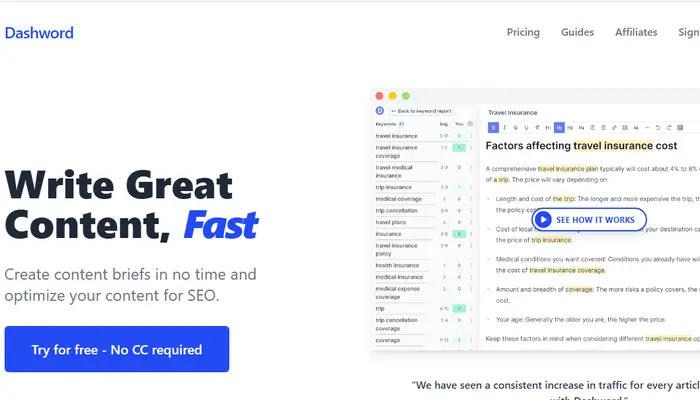
Best for: Small teams and simple content brief workflows.
Key features: Content briefs, keyword reports, SERP insights, content optimization, and monitoring.
Pros:
- Simple interface
- Good for briefs
- Free report available
- Helpful content monitoring
Cons:
- Less broad than full SEO suites
- Higher plans can become costly
- Limited if you need technical SEO tools
Pricing: Dashword lists Startup at $99/month and Business from $349/month, with the first report free.
My verdict: Dashword is best if you want focused briefs and monitoring without a complex platform.
9. Outranking
Outranking focuses on AI-assisted SEO writing and planning. It can help with outlines, briefs, and content drafts, but it should be used carefully because AI drafts still need human editing.
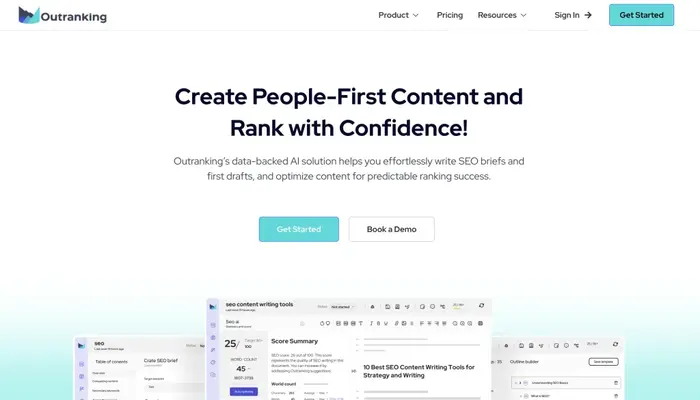
Best for: Users who want AI help with SEO outlines and drafts.
Key features: SERP analysis, AI writing, content briefs, semantic terms, and optimization support.
Pros:
- Helpful for outlines
- Supports AI-assisted writing
- Useful for SERP-based drafts
- Can speed up planning
Cons:
- Pricing details should be checked carefully
- AI content needs fact-checking
- May not suit teams that want manual editorial control
Pricing: Outranking pricing and plans should be checked directly before buying because public information can vary.
My verdict: Outranking can help with content creation with AI, but it should not replace expert editing or fact-checking.
10. GrowthBar
GrowthBar is made for people who want faster blog planning and AI content help. It is more useful for creating outlines and drafts than for deep enterprise-level content strategy.
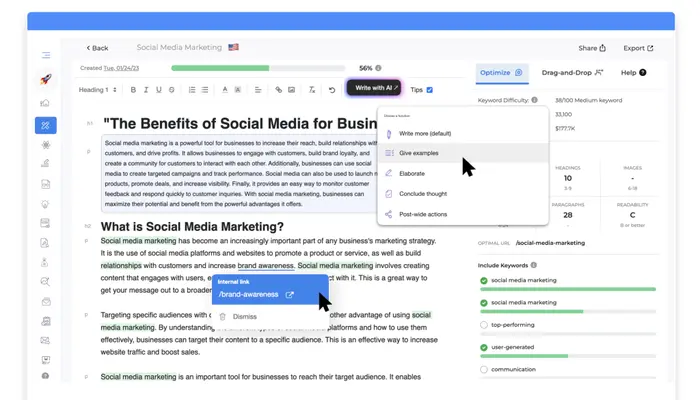
Best for: Bloggers and small marketing teams.
Key features: AI blog writing, keyword research, competitor insights, outlines, and basic optimization.
Pros:
- Simple for bloggers
- Helps create outlines quickly
- Useful for content ideas
- Lower starting price than many tools
Cons:
- Not as deep as advanced platforms
- AI drafts need careful review
- Not ideal for large editorial teams
Pricing: Public software listings commonly show GrowthBar starting around $29/month, but users should confirm current pricing on the official site before buying.
My verdict: GrowthBar is an AI-powered SEO tool for speed-focused blog planning. It can help generate optimized content ideas and outlines, but final content still needs human SEO review.
11. Hemingway
Hemingway is not a full SEO optimization platform, but it is very useful for readability. It helps make content clearer by highlighting hard sentences, passive voice, and wordy writing.
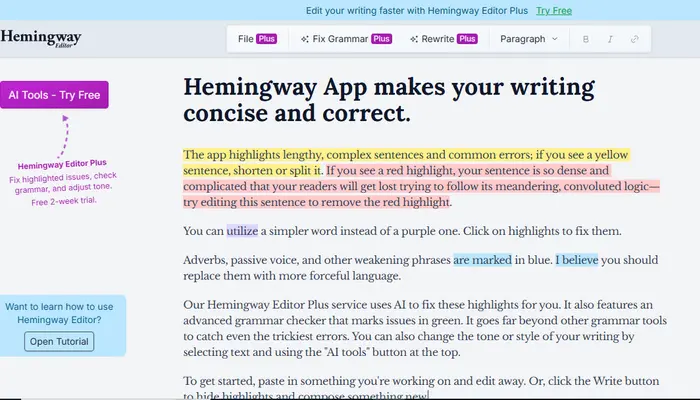
Best for: Writers who want clearer and simpler content.
Key features: Readability highlights, grammar support, tone improvements, and AI fixes in Plus.
Pros:
- Easy to use
- Great for readability
- Free basic editor available
- Helps reduce confusing sentences
Cons:
- No SERP analysis
- No keyword research
- No competitor gap data
Pricing: Hemingway offers a free editor and a 2-week trial for Editor Plus.
My verdict: Use Hemingway as a final SEO and readability check, not as your main SEO tool.
12. Ahrefs
Ahrefs is mainly an SEO research platform, not a pure writing optimizer. It helps with keyword research, competitor analysis, backlinks, content research, site audits, and AI visibility features.

Best for: SEO professionals and teams that need strong research data.
Key features: Keywords Explorer, Site Explorer, Site Audit, Content Explorer, Rank Tracker, Brand Radar, and free SEO tools.
Pros:
- Strong keyword data
- Excellent competitor research
- Powerful backlink analysis
- Useful free tools
Cons:
- Not mainly a writing editor
- Paid plans can be expensive
- Add-ons may increase cost
Pricing: Ahrefs lists Starter at $29/month and also shows paid Lite, Standard, Advanced, and Enterprise plans.
My verdict: Ahrefs is best for research before writing and optimization, especially when you need to check competitors and technical SEO issues.
13. CoSchedule Headline Studio
CoSchedule Headline Studio helps improve titles, headlines, and captions. It is not a full content optimization tool, but it helps with one of the most important parts of SEO content: the headline.

Best for: Blog titles, SEO headlines, and social captions.
Key features: Headline score, SEO suggestions, headline AI, keyword explorer, and word banks.
Pros:
- Free option available
- Useful for title testing
- Helps improve SEO headlines
- Easy for beginners
Cons:
- Only focuses on headlines
- Not a full SEO content tool
- Paid credits may be needed for regular use
Pricing: CoSchedule lists a free Headline Studio option with paid credit plans available.
My verdict: Use it to improve your title after the article is written, especially when writing long-form content where the headline needs to match intent.
Best Free and Paid SEO Content Optimization Tools
Free and paid tools both have value, but they solve different problems. Free tools are useful for basic checks and research. Paid tools are better when you need SERP analysis, briefs, NLP suggestions, competitor gaps, and a repeatable content workflow.
Best Free SEO Content Optimization Tools
Google Search Console is the best free tool for checking real search performance because it shows queries, clicks, impressions, and average position. Google says Search Console helps measure search traffic, review performance, fix issues, and see which queries bring users to your site.
Hemingway is useful for readability. Google Trends helps you explore what people are searching for right now, which can support topic research and seasonal content planning.
Ahrefs free tools can support basic SEO research, and CoSchedule Headline Studio can help improve titles before publishing. These tools help you get your content cleaner before moving into deeper paid optimization.
Best Paid SEO Content Optimization Tools
Paid tools are better when content is part of your business growth plan. Surfer SEO, Clearscope, Frase, MarketMuse, Semrush SEO Writing Assistant, Rankability, and NeuronWriter can help with briefs, SERP review, scoring, topic coverage, and content updates.
A paid tool is worth it if it saves time, improves consistency, and helps your team find gaps before publishing. It is not worth it if you only publish once in a while and do not use the data properly.
SEO Content Optimization Tools vs SEO Writing Tools
Many people mix these two categories, but they are different. SEO content optimization tools improve ranking readiness by checking search intent, topic depth, related terms, competitor coverage, headings, and page quality.
SEO writing tools help draft, rewrite, edit, or improve clarity. Some tools do both, but you should know what you are paying for. Hemingway improves readability. Surfer and Clearscope focus more on content optimization. Ahrefs helps more with research than writing.
How to Choose the Right SEO Content Optimization Tool?
The right tool depends on your skill level, publishing volume, team size, and budget. Do not choose a tool only because it is popular. Choose the one that matches your workflow and helps you make better content decisions.
- Best Tool for Beginners: Frase and Hemingway are good for beginners. Frase helps with briefs and SEO scores, while Hemingway makes writing clearer and easier to read.
- Best Tool for Bloggers: Surfer SEO, Frase, and NeuronWriter are useful for bloggers who publish or update articles regularly. If you include Surfer SEO in your stack, use its suggestions as guidance, not as a rulebook.
- Best Tool for Small Businesses: NeuronWriter and Dashword are practical choices because they offer helpful optimization features without requiring a large SEO budget.
- Best Tool for Agencies: Rankability and Semrush are stronger for agencies because they support broader SEO workflows, reporting, audits, and client work.
- Best Tool for Content Teams: Clearscope, MarketMuse, and Surfer SEO are better for teams that need briefs, quality control, and consistent editorial standards.
- Best Budget Tool: NeuronWriter is the best budget option because it gives NLP-based optimization at a lower starting price.
- Best Tool for AI Search Optimization: Rankability, MarketMuse, Semrush, and Surfer are worth checking if you care about AI search visibility, Google AI Overviews, and brand mentions in answer engines.
How to Use SEO Content Optimization Tools Before Publishing?
A tool gives better results when you use it as part of a real SEO workflow. Do not add every suggested keyword blindly because that can make the content sound forced. Before publishing, check search intent, review top-ranking pages, find missing topics, improve headings, add internal links, and fix weak on-page optimization.
To make sure nothing gets overlooked, use our SEO Content Optimization Checklist to review important elements like metadata, images, readability, and overall on-page SEO before you publish.
The goal is simple: write your content for readers first, then use the tool to make it clearer, deeper, and easier to measure through SEO performance data.
Which SEO Content Optimization Tool Should You Choose?
There is no single best tool for everyone. A solo blogger, agency, SaaS team, and local business will not need the same setup. Use the table below as a simple starting point.
| Need | Best Tool |
|---|---|
| Best overall | Surfer SEO/Clearscope |
| Best for agencies | Rankability/Semrush |
| Best for beginners | Frase/Hemingway |
| Best for small businesses | NeuronWriter/Dashword |
| Best free setup | Google Search Console + Hemingway |
| Best for AI search | Rankability/MarketMuse |
If you are just starting, use free tools first and learn how search intent works. If content is a serious growth channel for your business, a paid SEO content optimization tool can help you work faster, plan better, and update pages with more confidence.