

People are changing the way they search for information. Instead of only checking traditional search results, many users now rely on AI platforms to get direct answers, recommendations, and summaries. Tools like Google AI Overviews, ChatGPT, Gemini, Claude, and Perplexity are influencing how users discover information, brands, and services.
Traditional SEO tools can track rankings and traffic, but they do not always show how visible a website is in AI generated answers. These tools help businesses understand their visibility across AI platforms, identify content opportunities, and adapt to new approaches such as AI SEO, Answer Engine Optimization (AEO), and Generative Engine Optimization (GEO).
This guide compares the best AI Search Optimization Tools, including their features, pricing, and use cases, to help you choose the right tool for improving visibility across AI search platforms.
What Are AI Search Optimization Tools?
These platforms help businesses measure how their content appears in AI generated responses and identify ways to improve their presence across answer engines. They analyze how content appears in AI responses, which sources are being referenced, and where opportunities exist to increase visibility.
Unlike AI writing tools that mainly help create or edit content, these tools focus on optimization and performance tracking. Their purpose is to help marketers understand how AI systems interpret content and improve the chances of being mentioned in answers provided by AI search platforms.
By identifying content gaps, monitoring brand mentions, and analyzing AI search performance, these tools help businesses adapt their SEO strategies for the growing use of AI powered search experiences.
AI Writing Tools vs AI Search Optimization Tools
Producing content and making sure it gets discovered by AI systems require different approaches. AI writing tools help produce text, while AI Search Optimization Tools focus on making content more discoverable and trusted by answer engines that generate responses.
Platforms such as ChatGPT, Gemini, Claude, Perplexity, Microsoft Copilot, and Google AI Overviews depend on content signals to provide answers.
While writing tools support content creation, optimization tools help track AI citations, AI search rankings, and overall AI search visibility.
| AI Writing Tools | AI Search Optimization Tools |
|---|---|
| Generate content and assist with drafting | Improve AI search visibility and performance |
| Focus on creating and editing content | Focus on monitoring and optimizing visibility |
| Mainly used by writers and content teams | Used by SEOs and marketers |
| Example: ChatGPT | Example: Profound |
Both types of tools have different roles in modern AI SEO. Writing platforms help create useful content, while optimization platforms support strategies like Generative Engine Optimization by improving how content appears in AI-generated answers and conversational search results.
Quick Comparison of the Best AI Search Optimization Tools
Each platform offers different capabilities, so the right choice depends on what you want to measure and improve. The comparison below looks at AI visibility tracking, reporting features, platform support, usability, and how well each tool fits different SEO teams.
| Tool | Best For | AI Platforms | Free Plan | Starting Price |
|---|---|---|---|---|
| Profound | Enterprise AI visibility tracking | ChatGPT, Google AI Overviews, Perplexity | No | Custom |
| Peec AI | AI search performance monitoring | ChatGPT, Gemini, Perplexity | Yes | Paid plans available |
| Semrush AI Toolkit | SEO and AI visibility insights | Google AI Overviews, ChatGPT | No | Paid plans available |
| Goodie AI | AI search optimization insights | ChatGPT, Perplexity | Yes | Paid plans available |
| Scrunch AI | Brand presence tracking in AI answers | ChatGPT, Claude, Perplexity | No | Custom |
| Otterly AI | AI visibility monitoring | ChatGPT, Gemini, Perplexity | Yes | Paid plans available |
| Rankscale | AI search tracking and reporting | ChatGPT, Perplexity | No | Paid plans available |
| Waikay | AI visibility analysis | AI search platforms | Yes | Paid plans available |
| Nightwatch | SEO and AI search monitoring | Google AI Overviews, AI platforms | No | Paid plans available |
| Writesonic GEO | Generative Engine Optimization | ChatGPT, Google AI Overviews, Perplexity | Yes | Paid plans available |
Top 10 AI Search Optimization Tools 2026
Understanding how your brand appears in AI results requires more than traditional ranking reports. These tools provide insights into mentions, citations, competitors, and content performance across AI platforms.
1. Profound
Built for teams that need deeper AI search insights, Profound tracks how brands appear in AI generated responses and which sources influence those results. It provides visibility into brand mentions, AI citations, and performance across platforms such as ChatGPT and Google AI Overviews.
Key Features
- AI visibility tracking across major answer engines
- Monitoring brand mentions and AI citations
- Competitor tracking and market comparison
- Visibility reports for AI search performance
- Insights into how AI platforms represent a brand
Pros
- Useful for enterprise level AI search monitoring
- Provides detailed visibility insights
- Helps identify opportunities to improve AI presence
Cons
- Pricing may not suit small businesses
- Advanced features can require SEO expertise
Pricing: Custom pricing based on business needs and requirements.
Best For: Large businesses, agencies, and SEO teams that need detailed AI search visibility tracking.
Our Verdict: Profound is a strong choice for organizations that want to understand their AI search presence and track how their brand appears across emerging AI answer platforms. It is especially useful for teams focused on improving AI citations and long term AI SEO strategies.
2. Peec AI
Peec AI focuses on measuring brand presence across AI platforms and showing where content gains or loses visibility. The platform helps teams analyze AI generated responses, monitor mentions, and identify areas for improving their AI search performance.
Key Features
- AI search visibility tracking
- ChatGPT monitoring
- Brand mention analysis
- Competitor comparison
- Performance reporting
Pros
- Simple interface for tracking AI visibility
- Useful for ongoing AI search analysis
- Helps identify content opportunities
Cons
- Fewer advanced features than enterprise tools
- Best suited for teams already familiar with SEO
Pricing: Offers paid plans with pricing based on usage and features.
Best For: Marketers and SEO professionals looking for straightforward AI search monitoring.
Our Verdict: Peec AI is a practical choice for businesses that want a clear view of their AI search performance without needing complex enterprise solutions.
3: Semrush AI Toolkit
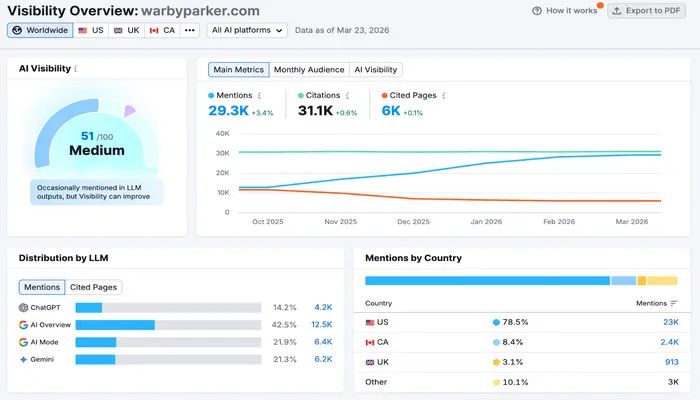
For teams already using Semrush, the AI Toolkit adds AI search insights to existing SEO workflows. It connects traditional search analytics with emerging AI visibility data to help marketers understand changes in how content appears across search experiences.
Key Features
- AI visibility insights
- Search analytics integration
- Competitor analysis
- SERP monitoring
- SEO performance tracking
Pros
- Built on Semrush’s established SEO platform
- Combines traditional SEO and AI search insights
- Useful for existing Semrush users
Cons
- Advanced features may require higher plans
- AI specific tracking is still developing
Pricing: Available through Semrush subscription plans.
Best For: SEO teams and agencies already using Semrush for search optimization.
Our Verdict: Semrush AI Toolkit is a good fit for professionals who want to connect traditional SEO data with emerging AI search optimization workflows.
4. Goodie AI
Goodie AI provides a simpler way to evaluate how brands appear in AI powered search results. It analyzes content visibility and how answer engines reference information when generating responses.
Key Features
- AI search monitoring
- Brand visibility tracking
- AI response analysis
- Competitor insights
- Performance reporting
Pros
- Easy to understand reports
- Useful for tracking AI search changes
- Helps identify visibility gaps
Cons
- Limited advanced enterprise features
- Less established compared to larger SEO platforms
Pricing: Offers free access with paid options available.
Best For: Small businesses and marketers exploring AI search optimization.
Our Verdict: Goodie AI is suitable for teams that need simple visibility tracking and want to start measuring their performance in AI search.
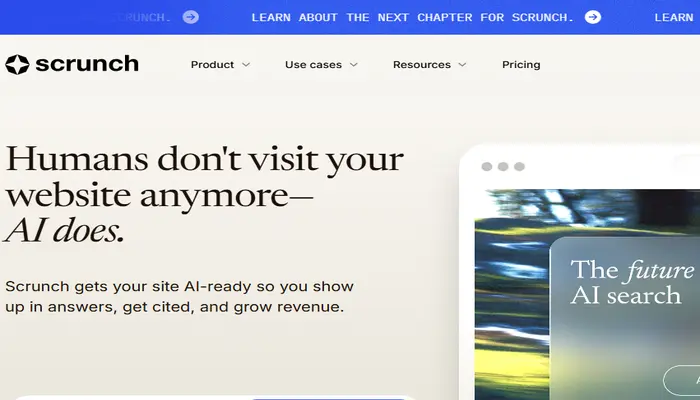
5. Scrunch AI
Scrunch AI is designed to analyze brand representation inside AI answers and conversational search platforms. It helps teams understand how AI systems describe their brand and where content improvements may increase visibility.
Key Features
- AI citation monitoring
- Brand visibility analysis
- Entity tracking
- Competitor insights
- AI answer evaluation
Pros
- Focuses specifically on AI search visibility
- Helps understand brand representation
- Useful for content optimization
Cons
- May not include all traditional SEO features
- Better suited for AI focused campaigns
Pricing: Custom pricing based on requirements.
Best For: Brands and marketing teams focused on AI visibility management.
Our Verdict: Scrunch AI is valuable for companies that want to understand how AI platforms describe their brand and where improvements can be made.
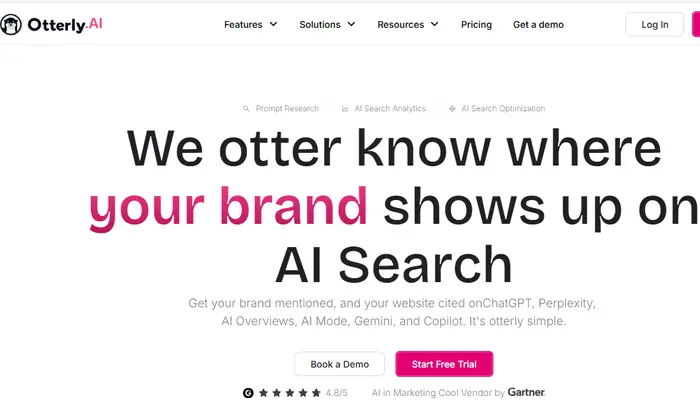
6. Otterly AI
Otterly AI provides ongoing visibility checks across AI platforms, allowing teams to monitor changes in brand mentions, citations, and content references. It gives marketers a clearer view of how their presence changes over time.
Key Features
- AI search monitoring
- ChatGPT tracking
- AI citation analysis
- Competitor tracking
- Visibility reports
Pros
- Simple monitoring workflow
- Useful for regular AI visibility checks
- Supports competitor research
Cons
- May not replace full SEO platforms
- Advanced reporting depends on plan selection
Pricing: Offers paid plans with different feature levels.
Best For: SEO professionals and businesses monitoring AI search growth.
Our Verdict: Otterly AI is a useful option for teams that want regular updates on AI visibility and brand performance across answer engines.
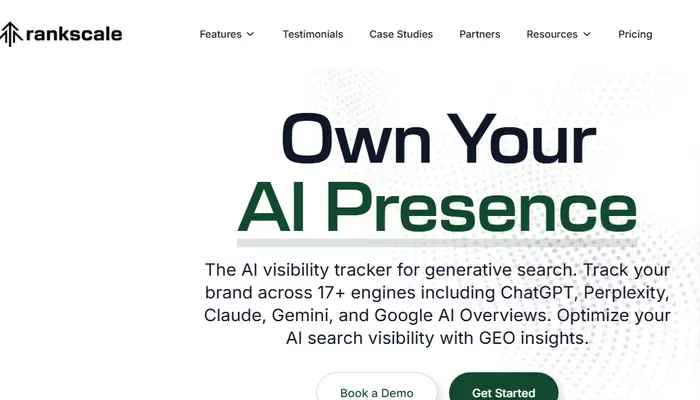
7. Rankscale
Rankscale provides tracking and reporting features for businesses that want to measure performance in AI search results. It helps teams review visibility trends, competitor activity, and opportunities for improving AI generated mentions.
Key Features
- AI search tracking
- Visibility analysis
- Competitor monitoring
- AI response insights
- Reporting tools
Pros
- Focused on AI search performance
- Helps track visibility changes
- Useful for SEO teams
Cons
- Smaller tool ecosystem
- May require additional SEO tools for complete workflows
Pricing: Paid plans are available based on features and usage.
Best For: SEO teams looking for dedicated AI search tracking solutions.
Our Verdict: Rankscale provides useful AI visibility insights for marketers who want to measure performance beyond traditional SERP rankings.
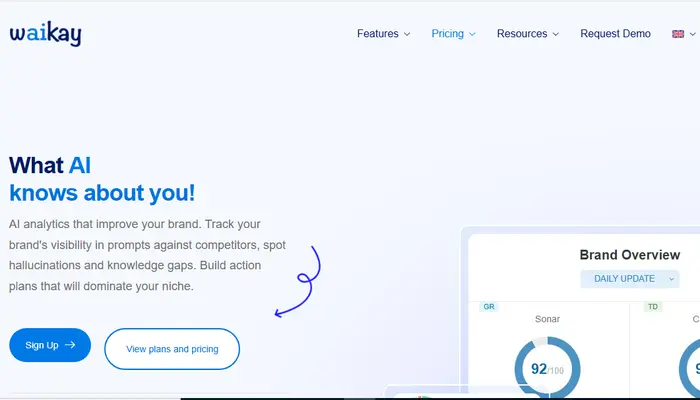
8. Waikay
Waikay offers a straightforward approach for businesses exploring AI search performance. The platform helps users understand how answer engines discover their content and where visibility improvements may be possible.
Key Features
- AI visibility monitoring
- Brand tracking
- AI response analysis
- Search performance insights
- Reporting features
Pros
- Simple approach to AI monitoring
- Helps track emerging search trends
- Suitable for beginners
Cons
- Fewer advanced capabilities
- Limited information compared with larger platforms
Pricing: Pricing depends on available plans and features.
Best For: Businesses starting with AI search optimization.
Our Verdict: Waikay can be a useful starting point for teams that want basic insights into AI search visibility and brand presence.
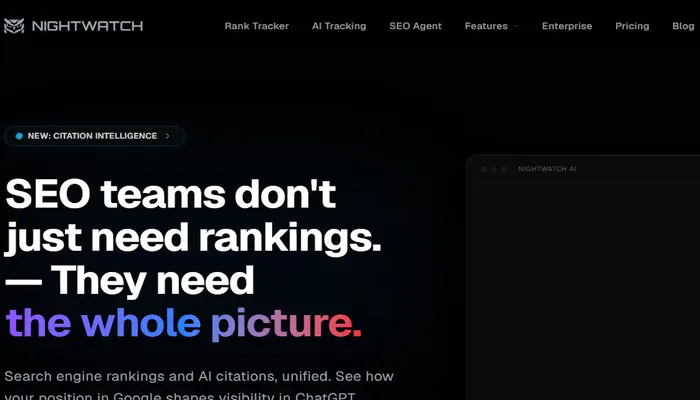
9. Nightwatch
Nightwatch remains focused on SEO tracking while helping teams monitor broader search performance trends. Its reporting features support marketers who want reliable ranking data alongside evolving AI search strategies.
Key Features
- SERP monitoring
- Rank tracking
- Search analytics
- Competitor tracking
- Reporting dashboards
Pros
- Strong traditional SEO tracking features
- Detailed ranking reports
- Useful for agencies
Cons
- More focused on SEO than AI search
- AI specific features may be limited
Pricing: Paid plans are available based on tracking needs.
Best For: SEO agencies and marketers managing search performance.
Our Verdict: Nightwatch works best for teams that need reliable SERP monitoring and search analytics while adapting to AI influenced search.
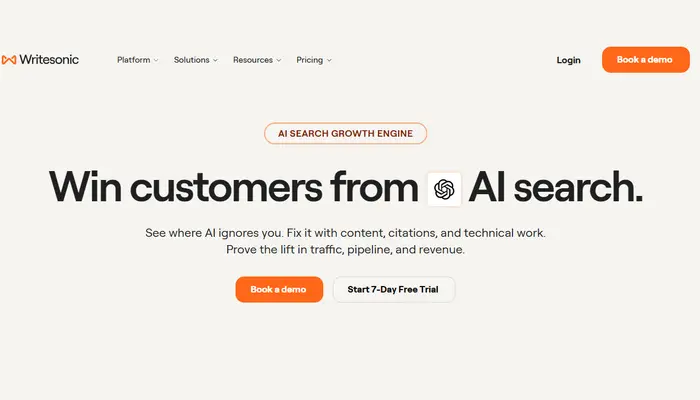
10. Writesonic GEO
Writesonic GEO combines content optimization with Generative Engine Optimization workflows. It helps marketers adapt content structures so information is easier for AI platforms and answer engines to understand.
Key Features
- GEO focused content optimization
- AI search visibility insights
- Content improvement suggestions
- AI response analysis
- SEO content support
Pros
- Combines content creation with AI optimization
- Useful for marketers and writers
- Supports GEO strategies
Cons
- More content focused than pure monitoring tools
- Not designed mainly for enterprise tracking
Pricing: Offers free access with paid plans available.
Best For: Content teams and marketers focusing on Generative Engine Optimization.
Our Verdict: Writesonic GEO is a practical choice for teams that want to optimize content for AI search while maintaining a strong SEO workflow.
Which AI Search Optimization Tool Is Right for You?
If you’re not sure which tool to choose, consider your main goal first. Some platforms focus on enterprise reporting, while others are better suited for agencies, beginners, or specific tracking needs.
- Best Overall: Profound suits businesses needing detailed visibility data, competitor insights, and cross-platform tracking.
- Best for Agencies: Semrush AI Toolkit combines traditional SEO metrics with AI search reporting, making it practical for client work.
- Best for Beginners: Otterly AI and Goodie AI offer simple monitoring without a difficult setup.
- Best for Enterprises: Profound and Scrunch AI support advanced analysis, larger teams, and complex reporting requirements.
- Best Budget Option: Peec AI and Writesonic GEO provide affordable access to essential AI visibility features.
- Best for AI Overview Tracking: Semrush AI Toolkit and Profound help monitor performance in Google AI Overviews and similar search results.
- Best for Brand Monitoring: Scrunch AI and Otterly AI track mentions, citations, and brand representation across answer engines.
Which AI Search Optimization Tools Offer the Best Historical Data?
Historical data shows whether AI visibility improves over time. It helps teams review mentions, citations, competitor movement, and reporting trends across different platforms.
The best tools save regular snapshots, support date comparisons, and show how tracked prompts perform after optimization. Some platforms offer deeper records, while others provide only limited history based on the selected plan.
Why Historical Data Matters
Past data helps marketers measure progress, compare results before and after updates, track citation changes, report outcomes to clients, and identify long-term patterns. It also makes it easier to separate real growth from short-term changes.
AI Search Optimization Platforms with the Best Data History
| Tool | AI Visibility Tracking | Competitor Analysis | Reporting & Analytics | Best For |
|---|---|---|---|---|
| Profound | Strong | Strong | Strong | Enterprises |
| Scrunch AI | Strong | Strong | Strong | Brand tracking |
| Rankscale | Strong | Moderate | Strong | AI visibility |
| Semrush AI Toolkit | Moderate | Limited | Strong | Agencies |
| Goodie AI | Limited | Limited | Moderate | Small teams |
Choose an AI search optimization platform with strong historical data when long-term reporting matters. The right tool helps measure campaign performance, spot trends, and improve future decisions.
Features to Look for in an AI Search Optimization Tool
The right AI Search Optimization Tool should provide more than basic tracking. It should help you understand how AI platforms discover, reference, and present your content. Look for features that support visibility measurement, competitor research, and ongoing optimization.
AI Overview Tracking
Tracks how your content and brand appear in Google AI Overviews and other AI generated search experiences. This helps identify changes in visibility and content performance.
ChatGPT Visibility Monitoring
Measures how often your brand appears in ChatGPT responses and other conversational search results. It helps marketers understand their presence across AI answer platforms.
Citation Tracking
Shows which sources AI systems reference when generating answers. Citation tracking helps improve content credibility and identify opportunities for earning more AI mentions.
Brand Mention Monitoring
Monitors brand mentions across platforms like Gemini, Perplexity, and Claude. Alerts and dashboards make it easier to track changes in brand visibility.
Competitor Monitoring
Compares your AI search performance with competitors by analyzing mentions, citations, and visibility trends. This helps uncover gaps in your optimization strategy.
Entity Analysis
Evaluates how AI systems understand your brand, topics, and related entities. Strong entity optimization can improve how platforms connect your content with relevant information from sources like the Knowledge Graph.
Historical Reporting
Provides historical data to measure progress over time. Detailed reports help teams understand whether their AI SEO efforts are improving visibility.
API Integrations
Allows tools to connect with existing platforms and workflows. API access can support automation, custom dashboards, and easier data management for larger teams.
Final Thoughts
AI search is changing how people discover information, and businesses need better ways to understand their visibility beyond traditional rankings. The right optimization tool can help track mentions, citations, competitors, and content performance across AI platforms.
Choose a platform based on your goals, budget, and workflow. Start with the features that matter most to your team and continue improving your content as AI search experiences evolve.