

AI search is quickly changing how people discover brands and make decisions online. Instead of only trusting on traditional search engines, users now get direct answers from platforms like ChatGPT, Perplexity, Gemini, and Google AI Overviews.
Google Search Console has also started showing “Generative AI” impressions, which means websites can now track visibility inside AI-generated results. This shift is creating a real visibility gap. Many websites still perform well in SEO tools like Search Console, but are missing from AI-generated answers where users are actually engaging.
That’s why AI search monitoring tools are becoming important. They help track how your brand appears inside AI responses, how often it is mentioned, and where competitors are gaining visibility. In this article, we’ll explain the best AI search monitoring tools in 2026 and how to choose the right one.
What Are AI Search Monitoring Tools and Why They Matter
AI search monitoring tools track how your brand appears inside AI-generated answers across platforms like ChatGPT, Perplexity, Gemini, and Google AI Overviews. This matters because search is no longer only about traditional search engine rankings.
Users are now getting direct answers from AI models, and many brands are not included in those responses even if they rank well in SEO tools like Google Search Console.
These tools help you see that gap clearly by showing:
- When your brand appears in AI responses
- Where competitors are mentioned instead
- How ai systems interpret your content
In simple terms, they help you understand whether AI systems actually “see” your brand or not, which is now critical for ai search visibility tracking.
Why Use AI Search Monitoring Tools
AI search monitoring tools are used because search is shifting from traditional search engine rankings to AI-generated answers in tools like ChatGPT, Perplexity, Gemini, and Google AI Overviews. In this new environment, visibility depends on whether AI includes your brand inside its responses, not just your ranking position.
These tools help you track what traditional SEO tools cannot show. A website may rank well but still be missing from AI answers, creating a hidden visibility gap.
They also help with:
- Brand monitoring across AI platforms
- Tracking ai mentions in responses
- Comparing competitors inside AI search
- Understanding ai search visibility changes
Google Search Console and AI Generated Impressions
Google Search Console now shows “Generative AI” impressions in performance reports, which is a major change in how visibility is tracked. It means websites can now see when their pages appear in AI-generated results like Google AI Overviews, not just traditional search listings.
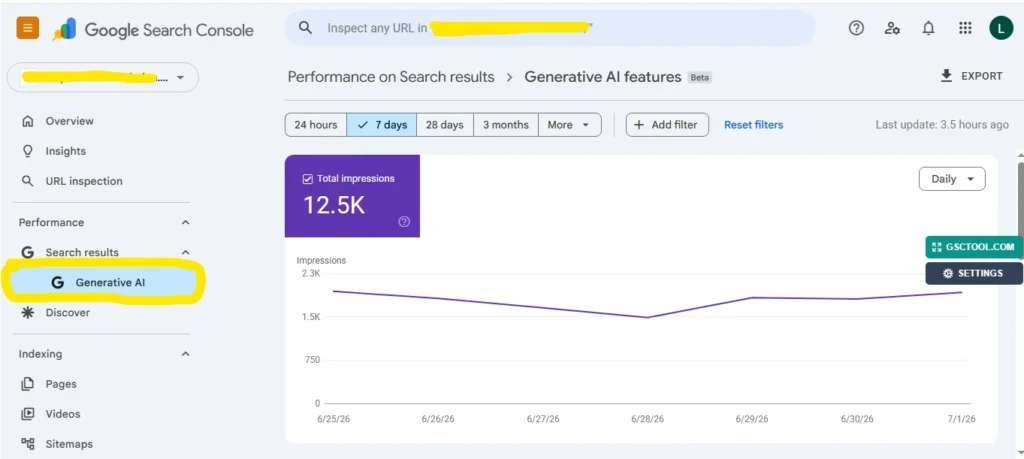
This helps understand how content is being used inside AI systems and shows that SEO visibility is expanding beyond normal rankings. For businesses, it also highlights why tracking AI visibility matters alongside traditional SEO tools.
Best AI Search Monitoring Tools in 2026
AI search is changing how visibility works across the internet. Businesses now need tools that track how they appear inside AI-generated answers, not just traditional search rankings.
Below are the best AI search monitoring tools in 2026 that help track ai visibility, brand monitoring, and llm monitoring across different AI systems.
1. Peec AI
Peec AI is an AI search monitoring tool that tracks how your brand appears inside AI-generated responses across platforms like ChatGPT, Perplexity, and Google AI Overviews. It focuses on simple AI visibility tracking so businesses can understand where they are mentioned and where they are missing in AI search results.
Cost: Free trial available, then paid plans
Best for: Startups and small teams
Pros:
- Easy to use
- Fast setup
- Clean interface
- Free trial available
Cons:
- Limited advanced analytics
- Not ideal for enterprises
- Smaller data coverage
- Basic reporting
2. Otterly AI
Otterly AI is an advanced AI search monitoring tool that tracks brand visibility across multiple AI models and conversational systems. It helps understand how often your brand appears in AI responses and how visibility changes over time across different AI platforms.
Cost: Paid tool with free trial
Best for: Agencies and SEO teams
Pros:
- Strong multi-model tracking
- Good competitor insights
- Reliable monitoring system
- Detailed reporting
Cons:
- Learning curve for beginners
- Higher pricing
- Setup takes time
- Can feel complex
3. Semrush AI Toolkit
Semrush AI Toolkit connects traditional SEO with AI search visibility tracking. It helps users understand performance across both search engines and AI-generated answers.
Cost: Included in Semrush plans
Best for: SEO professionals
Pros:
- Combines SEO + AI tracking
- Trusted data source
- Works with Search Console
- Easy integration
Cons:
- Not fully AI-native
- Limited deep AI analysis
- More SEO-focused
- Less LLM depth
4. Try Profound
Try Profound is built for deep AI search monitoring and enterprise-level analysis of how AI systems describe brands across different models and prompts.
Cost: Enterprise pricing
Best for: Large businesses
Pros:
- Deep AI response analysis
- Strong multi-model coverage
- Advanced reporting
- Enterprise insights
Cons:
- Expensive
- Complex interface
- Not beginner-friendly
- Requires onboarding
5. RankScale AI
RankScale AI measures brand presence inside AI systems and provides visibility scoring based on mentions, competitors, and missing coverage.
Cost: Paid plans with trial options
Best for: Competitor tracking
Pros:
- Visibility scoring system
- Competitor comparison
- Easy dashboards
- Missing mention tracking
Cons:
- Limited deep insights
- Focused on scoring
- Not enterprise-heavy
- Less strategic depth
6. Scrunch AI
Scrunch AI tracks how AI systems describe and position your brand, focusing strongly on brand perception and sentiment inside AI-generated responses.
Cost: Enterprise pricing
Best for: Large brands
Pros:
- Strong brand monitoring
- Sentiment tracking
- Enterprise analytics
- Reputation insights
Cons:
- Expensive
- Complex setup
- Not for small teams
- Requires onboarding
7. Goodie AI
Goodie AI is a lightweight AI search monitoring tool designed for simple visibility tracking across AI systems like ChatGPT and Perplexity.
Cost: Free trial + paid plans
Best for: Beginners
Pros:
- Very simple interface
- Fast results
- Beginner-friendly
- Easy setup
Cons:
- Basic features
- Limited reporting
- Not for agencies
- No deep analytics
8. AthenaHQ AI
AthenaHQ AI focuses on LLM monitoring and studies how AI models respond to different prompts and brand-related queries.
Cost: Paid tool (varies by plan)
Best for: Researchers
Pros:
- Deep AI behavior insights
- Prompt testing tools
- Strong research value
- Useful for strategy
Cons:
- Not beginner-friendly
- Technical setup
- Less visual reporting
- Limited simplicity
9. Evertune AI
Evertune AI continuously tracks AI search visibility changes over time across different AI systems and platforms.
Cost: Paid plans
Best for: Ongoing SEO campaigns
Pros:
- Real-time monitoring
- Alerts for changes
- Multi-platform coverage
- Good for campaigns
Cons:
- Requires continuous use
- Mid-level pricing
- Not deeply analytical
- Less beginner-focused
Key Features of AI Search Monitoring Tools
AI search monitoring tools include features designed to track how your brand appears inside AI systems. The most important feature is ai visibility tracking, which shows whether your brand appears in AI-generated answers. Another key feature is LLM monitoring, which explains how AI models describe your business.
Most tools also include prompt tracking and brand monitoring to show when and how your name appears in AI responses. Some tools even offer real-time updates so you can track visibility changes quickly.
AI Search Monitoring Tools Free vs Paid
AI search monitoring tools come in both free and paid versions.
Free tools usually give basic insights like limited AI mentions or simple visibility checks across a few AI platforms. They are useful for initial understanding but lack depth.
Paid tools offer more advanced features such as:
- Multi-platform AI tracking
- Competitor comparison
- Real-time monitoring
- Detailed ai search visibility tracking reports
Most businesses start with free trials and then move to paid tools once they need consistent AI search insights.
AI Search Monitoring Tools Comparison
| Tool | Best For | AI Visibility Tracking | LLM Monitoring | Pricing |
|---|---|---|---|---|
| Peec AI | Startups | Yes | Basic | Low–Mid |
| Otterly AI | Agencies | Yes | Advanced | Mid–High |
| Semrush AI Toolkit | SEO Teams | Yes | Medium | Included in Semrush |
| Profound AI | Enterprises | Yes | Very Advanced | High |
| RankScale AI | Competitor Tracking | Yes | Medium | Mid |
| Scrunch AI | Large Brands | Yes | Advanced | High |
| Goodie AI | Beginners | Basic | Basic | Low |
| Athena AI | Researchers | Yes | Advanced | Mid–High |
| Evertune AI | Campaign Tracking | Yes | Medium | Mid |
How SEO Teams Use AI Search Monitoring Tools
SEO teams use AI search monitoring tools to understand how their brand appears inside AI-generated answers, not just traditional search rankings.
They track:
- AI search tracking after content updates
- Competitor visibility inside AI responses
- Missing brand mentions in AI systems
This helps them adjust SEO strategy based on real AI behavior instead of assumptions.
How to Track Google AI Overviews Visibility
Tracking Google AI Overviews visibility means checking whether your brand appears inside AI-generated summaries in Google search results. Unlike traditional rankings, this depends on whether Google’s AI selects your content in its responses.
SEO teams usually:
- Test real search queries
- Compare changes over time
- Use search console data for signals
This helps understand how google ai overviews affect organic visibility.
How to Choose the Right AI Search Monitoring Tool
Choosing the right AI search monitoring tool depends on your goals and budget.
You should consider:
- Platform coverage across major AI systems
- Accuracy of visibility data
- Ease of use
- Reporting quality
- Availability of a free trial
A good tool should clearly show where your brand appears and how visibility changes across AI systems.
How AI Search Engines Decide Which Brands to Show
AI search engines like ChatGPT, Perplexity, Gemini, and Google AI Overviews don’t follow traditional ranking systems.
Instead, they generate answers based on:
- Trusted data sources
- Content relevance
- Consistency across the web
- Training patterns from AI models
This means visibility depends more on authority and context than keyword ranking.
How AI Models Decide Which Brands to Mention
AI models decide brand mentions based on how often a brand appears across trusted sources and how relevant it is to the query.
If a brand is widely referenced, it has a higher chance of appearing in AI responses. If not, it may be ignored even if it performs well in SEO.
Final Thoughts
AI search is changing how visibility works online.
Brands can no longer rely only on traditional SEO rankings. What matters now is whether they appear inside AI-generated responses across multiple AI systems.
AI search monitoring tools help track this shift by showing where your brand is visible, where it is missing, and how competitors are performing.
In the modern AI search ecosystem, tracking AI visibility is no longer optional — it is part of SEO strategy.