

Publishing content alone does not guarantee lasting rankings. Search intent changes, competitors improve their pages, and useful information can become outdated. A strong content optimization strategy helps you keep existing content accurate, relevant, and aligned with what users and search engines expect.
Content optimization is an ongoing process that may include keyword research, on-page SEO, internal linking, technical SEO, and content performance analysis.
This guide explains how to identify content gaps, improve content quality, prevent content decay, and use SEO tools and analytics to build a plan that supports steady organic traffic over time.
What Is a Content Optimization Strategy?
A content optimization strategy is a planned approach to improving existing pages so they stay relevant, useful, and competitive in search engine results. It uses keyword research, analytics, and content performance data to decide what to update and why.
Content optimization is the actual work done on a page, while the strategy sets priorities, goals, and measurement. It also supports a wider content strategy by improving what has already been published while guiding better future content. Learn more in What Is Content Optimization?.
Why Every Website Needs a Content Optimization Strategy for SEO
A website needs a content optimization strategy because search performance rarely stays stable on its own. Regular reviews help protect visibility, improve content quality, and keep important pages aligned with current user needs.
- Search intent changes over time. A query that once required a basic explanation may later demand comparisons, examples, or buying guidance.
- Competitors keep improving their pages. Stronger coverage, clearer structure, and better internal linking can push older content lower in search engine results.
- Information becomes outdated. Old facts, broken links, and expired advice reduce trust and weaken the relevance of your content.
- Google updates its ranking systems. Pages must continue offering useful, reliable information rather than depending on past performance.
- User expectations evolve. Readers increasingly expect direct answers, clear formatting, practical advice, and a smooth experience across devices.
A consistent review process helps ensure your content remains accurate, useful, and capable of supporting organic traffic over time.
Set Clear SEO Goals Before You Optimize Content
Optimization works best when every change is tied to a measurable outcome. Before editing a page, decide whether the priority is stronger visibility, more clicks, higher engagement, or better lead generation. Clear goals help you choose the right SEO metrics and avoid making updates without a purpose.
| Goal | Example KPI |
|---|---|
| Increase traffic | Organic sessions |
| Improve rankings | Average position |
| Increase CTR | Click-through rate |
| Generate leads | Conversion rate |
| Build topical authority | More ranking keywords |
Use analytics, Google Search Console, or a reporting dashboard to track progress. The key is to measure the result that matches the goal, not every available metric.
Audit Your Existing Content Before You Optimize
A content audit shows which pages deserve attention and which ones are already meeting their goals. Instead of making random edits, review performance data, compare each page with current search intent, and look for technical issues that may be limiting visibility. This creates a clear starting point for your optimization efforts.
Review SEO Performance and Keyword Rankings
Begin with data from Google Search Console, Google Analytics, or trusted SEO tools such as Semrush. Look for pages that have lost visibility, receive impressions but few clicks, or rank close to the first page. These often offer the fastest improvement opportunities.
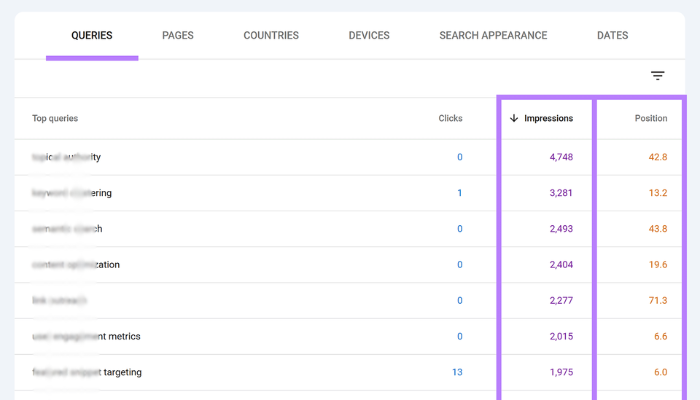
Check:
- Organic traffic: Has the page gained or lost visits over time?
- Keyword rankings: Which queries bring traffic, and which positions are declining?
- Impressions: Is the page appearing more often in organic search?
- CTR: Are users clicking when they see the title tag and meta description?
- Average position: Is the page moving closer to or farther from stronger rankings?
Review trends over several months rather than relying on a single week of data. This makes it easier to separate normal fluctuations from content decay.
Identify Content Gaps and Improvement Opportunities
Next, compare the page with the current query and the strongest results. Look for missing explanations, outdated examples, unanswered follow-up questions, weak comparisons, or sections that no longer match what the reader is trying to accomplish.
A content gap may also appear when competitors cover an important process, limitation, or decision factor that your page ignores. The goal is not to copy their structure.
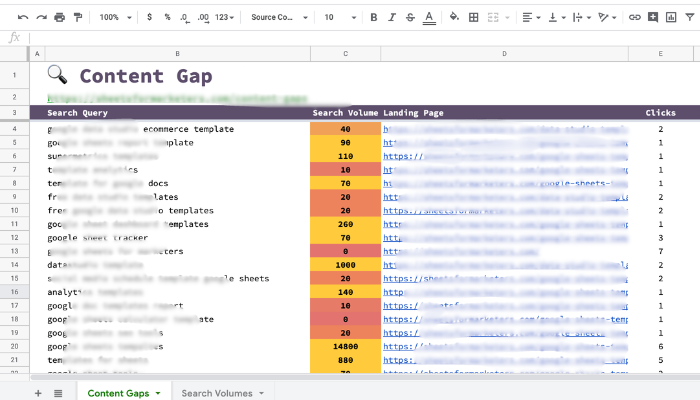
Use the findings to make your own content clearer, more complete, and more useful. Prioritize additions that help the reader take action or make a better decision.
Review On-Page SEO and Technical Issues
Even strong writing can underperform when the page is difficult for users or search engine bots to access and understand.
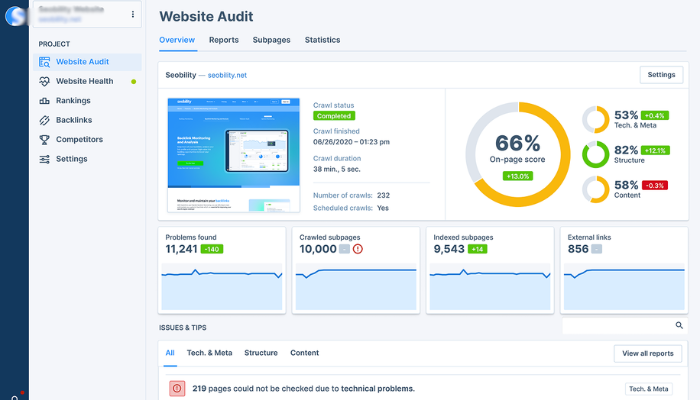
Review the following elements:
- Internal links: Connect the page to closely related resources and important pages on your site.
- Metadata: Make sure the title tag and meta description accurately describe the page.
- Images: Compress large files and add descriptive alt text where appropriate.
- Heading structure: Use a logical hierarchy that makes the information easy to follow.
- Broken links: Replace or remove links that lead to unavailable pages.
- Page speed: Fix heavy media, scripts, or layout issues that delay loading.
A useful audit should end with a prioritized action list, not just a collection of problems. Focus first on fixes that improve both user experience and search performance.
Decide Which Pages to Optimize First
Not every page deserves equal attention. Start with content that already shows demand or sits close to stronger search engine results, because targeted updates there are more likely to improve rankings and traffic.
Prioritize High-Impact Pages
| Page Type | Priority |
|---|---|
| Ranking in positions 11–20 | High |
| High impressions with a low CTR | High |
| Evergreen content with steady demand | High |
| New blog posts with limited data | Medium |
| Low-value pages with little business relevance | Low |
For example, imagine a guide ranking at position 14 that already earns thousands of impressions but receives few clicks. Instead of rewriting the entire page, review the queries driving those impressions.
You may find that the title does not match the main search intent, one important comparison is missing, and the page has no internal links from related high-authority articles.
Updating those three areas can produce a stronger result than replacing content that is already performing well.
Build a Content Optimization Priority Framework
A simple impact-versus-effort framework helps teams focus on changes that can produce meaningful gains without wasting resources. Score each page by its traffic potential, business value, ranking opportunity, and the amount of work required.
Begin with high-impact, low-effort tasks such as improving weak headings, updating outdated details, or adding links to relevant pages on your site. Larger projects, including major rewrites or technical fixes, should follow when the expected return justifies the time.
This keeps the content optimization strategy aligned with clear SEO goals rather than reacting to every minor decline.
Understand Search Intent and Keyword Research Before Optimizing Content
Search intent explains what a person hopes to achieve with a query, while keyword research shows the terms and phrases they use to express that need. Both should guide the page before any edits are made.
Choosing keywords based only on search volume can lead to content that attracts impressions but fails to satisfy the reader.
| Search Intent | Best-Fit Content Type |
|---|---|
| Informational | Guides and tutorials |
| Commercial | Comparisons and buyer guides |
| Transactional | Product or service pages |
| Navigational | Brand, login, or location pages |
Use keyword research tools such as Google Keyword Planner or Semrush to identify primary and secondary keywords, but judge them by relevance as well as volume.
The best content matches the intent behind the search, covers the subject clearly, and gives the reader the next useful step.
Analyze Competitors to Find Content Gaps
Competitor analysis helps reveal what the current results explain well, where they fall short, and what readers still need. The aim is not to copy top-ranking pages, but to identify opportunities to make your own content more complete, clearer, and more useful.
Identify Missing Topics and Content Gaps
When reviewing competing pages, look for:
- Important questions they leave unanswered
- Explanations that are too brief or confusing
- Missing practical examples or use cases
- Unsupported claims that need verified statistics
- A lack of visuals, screenshots, or step-by-step guidance
These gaps can show where your page has room to add genuine value rather than simply covering the same points with different wording.
Find Opportunities to Create Better Content for SEO
Better content comes from information gain: giving readers something useful they cannot easily find elsewhere. This may include a clearer framework, a more practical example, a stronger comparison, or a limitation competitors ignore.
The strongest opportunity is usually not to create more content, but to create content that fully answers the query with less confusion. When every section improves understanding or supports a decision, the page becomes more useful to readers and more competitive in search.
Build a Content Strategy That Strengthens Topical Authority
Topical authority grows when a website covers a subject through a connected group of useful pages rather than isolated articles. Start with a broad pillar page, then create supporting content around specific questions, processes, comparisons, and subtopics the audience needs.
Each supporting article should have a distinct purpose and avoid competing with another page for the same keyword. For example, a main guide on content optimization can link to separate resources about audits, keyword research, content decay, and content optimization tools.
Strong internal linking connects these pages into a clear topic cluster. It helps readers move to the next relevant answer and shows how the information relates across the site.
The key is to build depth around one subject while ensuring every page serves a unique search intent.
Create a Repeatable Content Optimization Strategy
A repeatable process turns scattered updates into a system your team can manage consistently. Each cycle should begin with evidence, move through focused improvements, and end with measurement.
Research and Plan Your Optimization Efforts
- Audit existing content. Review traffic trends, ranking changes, engagement, and business relevance to find pages with clear improvement potential.
- Analyze competing results. Study how leading pages answer the query, then note missing context, weak explanations, and opportunities to provide stronger guidance.
- Identify the best opportunities. Prioritize pages where a realistic update could improve visibility, clicks, leads, or topical coverage.
Planning before editing keeps your optimization efforts focused on meaningful outcomes rather than unnecessary rewrites.
Optimize Content Using SEO Best Practices
- Update headings. Make each heading specific, easy to scan, and aligned with the information readers expect to find.
- Improve internal links. Connect related resources using descriptive anchor text so visitors can continue learning without searching elsewhere.
- Add missing information. Fill gaps with useful examples, clearer instructions, verified facts, or decision-making guidance.
- Refine metadata. Write an accurate title tag and meta description that communicates the page’s value without exaggeration.
The strongest edits improve clarity and usefulness first, while supporting on-page SEO naturally.
Measure Results and Continuously Optimize
Record the update date and compare later performance with the original baseline. Review whether the changes improved visibility, engagement, or conversions, then use those findings to guide the next optimization cycle.
Measure the Success of Your Content Optimization Efforts
Optimization is only useful when you can show what changed after the update. Compare results against a clear baseline and review trends over a meaningful period rather than reacting to daily fluctuations.
Track SEO Performance Metrics
Monitor the signals that show whether the page is gaining stronger visibility in organic search:
- Rankings: Check whether target queries are moving toward more valuable positions.
- Organic traffic: Measure whether the page is attracting more qualified visits.
- CTR: Review whether users are clicking the result after seeing its title and description.
- Impressions: Track how often the page appears for relevant searches.
These metrics reveal whether the page is becoming easier to discover, but they do not show whether visitors find it useful.
Monitor User Engagement
Engagement data helps explain what people do after landing on the page:
- Average engagement time: This shows how long visitors actively engage with the page, but it should be reviewed alongside conversions and other behavior signals.
- Scroll depth: This shows how far users move through the article and where interest may drop.
- Bounce rate: A high rate is not always negative, especially when a page answers the query quickly, so review it alongside other behavior signals.
Use these insights to identify weak sections, unclear explanations, or calls to action that appear too late.
Measure Business Impact
The strongest content supports wider business goals, not just rankings and traffic:
- Leads: Track form submissions, calls, sign-ups, or enquiries.
- Sales: Measure purchases influenced by the page.
- Conversions: Compare the percentage of visitors who complete the intended action.
- Revenue: Connect content performance with actual financial value where tracking allows.
A successful update should improve the metric tied to the page’s purpose. More traffic has limited value if it does not attract the right audience or support a meaningful outcome.
Review and Refresh Content Using SEO Best Practices
Even strong pages can lose value as facts change, new competitors appear, and audience needs to shift. A planned refresh helps preserve accuracy, strengthen relevance, and prevent content decay without rebuilding the entire page.
Common signs that an update is needed include:
- Declining traffic: Visits fall steadily despite stable demand for the topic.
- Outdated statistics: Figures, dates, examples, or recommendations no longer reflect current conditions.
- Ranking drops: Important queries lose positions over several weeks or months.
- Search intent changes: The results now favor a different format, level of detail, or type of answer.
- New competitors: Recently published pages provide clearer guidance, fresher evidence, or stronger examples.
Focus each refresh on what has actually changed. Replace weak material, verify links and claims, and preserve sections that still serve the reader well. For a practical review process, use this Content Optimization Checklist.
Common Content Optimization Mistakes That Hurt SEO
Several mistakes can weaken content performance even when the page looks well written:
- Optimizing without data: Editing pages based on guesswork can waste time and remove elements that were already working.
- Ignoring search intent: A page may target the right keyword but still underperform if it uses the wrong format or answers the wrong question.
- Keyword stuffing: Repeating terms unnaturally reduces readability and can make the content feel written for search engines instead of people.
- Weak internal linking: Poorly connected pages are harder for readers to explore and give search engine bots less context about topic relationships.
- Not tracking results: Without before-and-after data, it is difficult to know whether the update improved rankings, traffic, engagement, or conversions.
The best practice is to make evidence-based changes, keep the reader’s goal central, and measure the outcome of every meaningful update.
How AI Supports a Modern Content Optimization Strategy?
AI can help analyze keywords, spot content gaps, and organize performance data faster. Its role is to support research and planning, while human review protects accuracy, originality, and search intent.
Used carefully, AI can make optimization more efficient without lowering content quality. Learn more in AI content optimization.
Content Optimization Tools That Support Your SEO Strategy
The right tools make it easier to find problems, understand user behavior, and improve pages based on evidence rather than guesswork. Choose them according to the task instead of relying on one platform for everything.
SEO and Analytics Tools
Google Search Console shows how pages appear in search, while Google Analytics explains what visitors do after arriving.
Content Optimization Tools
Platforms such as Surfer SEO and Clearscope help review topic coverage, related terms, and on-page opportunities. Their recommendations should guide editorial decisions, not control the writing.
AI Tools for Content Optimization
AI tools can assist with research, outlines, and early drafts, but factual checks and human editing remain essential.
| Tool | Primary Purpose |
|---|---|
| Google Search Console | Search performance tracking |
| Google Analytics | User behavior analysis |
| Surfer SEO | On-page content optimization |
| Clearscope | Topic and keyword coverage |
| ChatGPT | Research and drafting support |
For a broader comparison, read our guide to the best SEO content optimization tools.
Conclusion
A strong content optimization strategy keeps valuable pages useful, accurate, and aligned with changing search behavior. The best results come from reviewing performance, fixing clear weaknesses, and measuring whether each update improves visibility, engagement, or conversions.
For the fundamentals, start with What Is Content Optimization?. Then use the Content Optimization Checklist to guide each review, explore AI Content Optimization for responsible automation, and compare the Best SEO Content Optimization Tools for your workflow. The key is to improve content with purpose, not simply make more changes.